The image shows a person wearing gloves and a white lab coat, standing next to a machine with a clear plastic door through which a circular object can be seen, likely in a laboratory setting.

CEREC

The image shows a person wearing gloves and a white lab coat, standing next to a machine with a clear plastic door through which a circular object can be seen, likely in a laboratory setting.
The image features a man with a smile, presenting an advertisement for a dental clinic named  CEREC  that offers same-day dentistry services.

Same-day Ceramic Restorations: Precision, Comfort, and Predictable Results

Why Chairside CAD/CAM Restorations Make Sense

For many patients, the most compelling benefit of modern chairside restorations is the combination of speed and accuracy. Using an integrated CAD/CAM workflow, dentists can move from diagnosis to finished restoration in a single visit without compromising fit or function. That efficiency reduces time in the chair and removes the uncertainty that sometimes accompanies multi-visit treatment plans.

The technology behind these restorations—commonly known by the brand name CEREC—was developed to streamline every step of crown, inlay, and onlay fabrication. Rather than relying on laboratory turnaround, the digital process captures the tooth anatomy, designs the restoration virtually, and produces a ceramic piece on-site. Patients experience fewer appointments, and clinicians maintain control over each phase of treatment.

Another practical advantage is the patient experience. Digital scanning replaces traditional putty impressions, which many people find uncomfortable. This modern approach usually results in less gagging, reduced appointment fatigue, and a smoother overall visit. When comfort and precision come together, patients are more likely to follow through with recommended care.

The image shows a dental hygienist performing a teeth cleaning procedure on a seated patient with a focus on oral health care.

A Complete Crown in One Appointment: What Happens

The single-visit crown process begins with a careful assessment of the tooth and surrounding structures. Once the tooth is prepared, an intraoral scanner captures detailed, three-dimensional images—removing the need for physical impression materials. Those digital files form the basis for designing a restoration that matches the tooth's shape and occlusion precisely.

After the virtual design is finalized, a chairside milling unit fabricates the restoration from a high-quality ceramic block. The dentist can then adjust, stain, and polish the piece to blend with adjacent teeth before cementing it in place. Because the restoration is made and fitted while you wait, there’s no temporary crown and no waiting period for lab-produced work.

This approach is particularly helpful for patients who want to minimize disruption to their schedules. With careful planning and a streamlined workflow, a fully functional, esthetic crown can be completed the same day as the initial appointment—without sacrificing clinical standards.

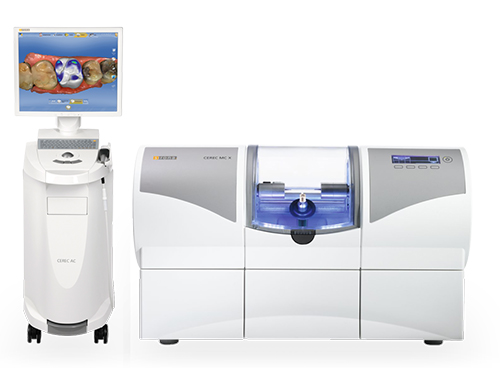
The image displays various pieces of laboratory equipment including a large machine with a digital display and control panel, an overhead projector, and a smaller device resembling a coffee maker.

How Digital Scanning and On-Site Milling Work Together

The heart of the system is digital imaging and computer-aided design. An ergonomically designed scanning wand collects high-resolution, three-dimensional data of the prepared tooth and the surrounding bite. That dataset is then imported into design software, where the clinician refines contours, contacts, and occlusion to ensure the restoration will function comfortably with the opposing teeth.

Once the digital design is approved, the file is sent to a chairside milling unit that shapes a restoration from a solid ceramic block. These ceramics are formulated to be durable and lifelike; afterward, the piece may receive final characterizations and glazing to match neighboring dentition. The finished restoration is evaluated for fit, polished, and then adhesively bonded to the tooth.

Because the entire workflow is controlled within the operatory, there are fewer variables between preparation and final placement. That controlled environment helps improve fit and marginal integrity, which are important factors in the long-term success of a restoration.

A woman with curly hair, wearing a white shirt and black pants, stands confidently in an office setting, smiling at the camera.

Natural Appearance and Long-Term Performance

Contemporary dental ceramics used in chairside restorations are engineered to mimic the optical properties of natural enamel. That means restorations can be shaded and glazed to blend seamlessly with adjacent teeth for a life-like appearance. The result is a restoration that looks natural at first glance and integrates harmoniously with your smile.

Beyond looks, these ceramics offer strong, wear-resistant surfaces that perform well under normal chewing forces. Proper preparation, adhesive technique, and occlusal adjustment all contribute to longevity. With routine home care and regular dental checkups, many patients enjoy dependable performance from these restorations for years.

Because the material is biocompatible and non-metallic, it is a good option for patients who prefer metal-free dentistry. The aesthetic flexibility and strength of these restorations make them a versatile choice for restoring both anterior and posterior teeth.

Is This Treatment Right for You? What to Expect

Candidacy for chairside ceramic restorations depends on the tooth's condition, the extent of restoration needed, and overall oral health. Teeth with extensive structural damage, certain bite considerations, or complex multi-tooth reconstructions may still benefit from laboratory-fabricated work. During an evaluation, your dentist will review these factors and recommend the most appropriate path to a durable result.

For typical single-tooth crowns, inlays, or onlays, the appointment is organized to minimize discomfort and maximize efficiency. Local anesthesia is used as needed, and each step—from preparation to final cementation—is performed with attention to precision. Patients can generally expect to leave the office with a finished restoration and clear aftercare instructions.

Aftercare is straightforward: maintain good oral hygiene, avoid unusually hard foods for a short period, and attend routine examinations so the restoration can be monitored. If follow-up or adjustments are needed, your dental team will schedule them to ensure function and comfort are optimized.

At Stratford Family Dental, we focus on helping patients understand their options and feel confident in their care. If a single-visit restoration is appropriate, we’ll explain the clinical steps and what you can expect during and after your appointment.

In summary, chairside CAD/CAM restorations such as those produced with CEREC offer a modern, efficient way to restore teeth with precision ceramic materials and a patient-friendly workflow. They combine digital scanning, in-office fabrication, and skilled clinical techniques to deliver esthetic, long-lasting results in a single visit. Contact us to learn more about whether this treatment is a good fit for your dental needs.

Frequently Asked Questions

What is CEREC and how does it differ from traditional crown methods?

+

CEREC is a chairside CAD/CAM system that allows dentists to design, mill, and place ceramic restorations in a single appointment. Unlike traditional crown methods that require physical impressions and laboratory fabrication, CEREC uses digital intraoral scanning and on-site milling to produce a restoration during the visit. This digital workflow reduces the number of appointments and eliminates the need for a temporary crown in many cases. The result is a streamlined process that preserves clinical control over fit and esthetics.

Traditional lab-fabricated crowns are still an important option for complex cases, but CEREC is well suited for many crowns, inlays, and onlays where same-day fabrication is appropriate. Because the design and milling happen in the operatory, clinicians can make immediate adjustments and verify occlusion before cementation. The digital record also facilitates predictable reproduction if a future restoration is needed.

How does the single-visit CEREC workflow work from start to finish?

+

The single-visit workflow begins with a clinical evaluation and tooth preparation similar to a conventional crown appointment. An intraoral scanner captures high-resolution, three-dimensional images of the prepared tooth and surrounding bite, and those images are used to design the restoration in CAD software. Once the virtual design is approved, the file is sent to a chairside milling unit that creates the restoration from a ceramic block, and the dentist finishes, stains, and polishes the piece before placement. Finally, the restoration is evaluated for fit, adjusted as needed, and adhesively bonded to the tooth.

Because the entire process occurs within the operatory, the team manages each step to ensure proper contacts, contours, and occlusion. The clinical team can show patients the digital design and explain any final cosmetic or functional adjustments prior to milling. This integrated approach helps achieve efficient, predictable results in a single appointment.

Who is a good candidate for a chairside CAD/CAM restoration?

+

Good candidates for CEREC restorations include patients who need single-tooth crowns, inlays, or onlays and who prefer a reduced number of visits. Candidates should have sufficient remaining tooth structure to support an adhesive restoration and a stable bite that does not require extensive occlusal reconstruction. Patients with good periodontal health and manageable occlusal forces often experience the best outcomes with same-day ceramics.

Certain clinical situations, such as very large restorations, severe bite dysfunction, or multi-unit bridges, may be better suited to laboratory-fabricated work or alternative restorative approaches. During an evaluation, the dentist will review your medical and dental history, assess the tooth’s condition, and recommend the most appropriate restorative pathway based on long-term prognosis and functional needs.

What materials are used for CEREC restorations and how durable are they?

+

CEREC restorations are milled from high-strength dental ceramics such as lithium disilicate or advanced zirconia-based blocks, materials engineered for both esthetics and function. These ceramics mimic the optical properties of natural enamel and can be stained and glazed to blend with adjacent teeth for a lifelike result. When properly selected and bonded, these materials offer excellent wear resistance and fracture strength suitable for most anterior and posterior applications.

Longevity depends on factors such as the chosen ceramic, the quality of the adhesive protocol, the amount of remaining tooth structure, and the patient’s bite and oral hygiene. With correct clinical technique and routine maintenance, many patients enjoy durable performance from these restorations for years. The dentist will select the material that balances esthetic demands and functional requirements for each individual case.

How accurate and well-fitting are CEREC restorations compared with lab-made crowns?

+

CEREC restorations can achieve excellent marginal fit and internal accuracy thanks to high-resolution digital scanning and precision milling. The controlled, in-office workflow reduces variables associated with impression distortion and laboratory communication, which can improve consistency between preparation and final restoration. Clinicians can immediately assess and refine contacts and occlusion before cementation, helping secure a precise fit at the time of placement.

Complex multi-unit cases or highly customized laboratory frameworks may still benefit from specialized lab processes, but for many single-tooth restorations CEREC provides comparable clinical outcomes. The final fit also depends on the clinician’s skill with the digital design software and adhesive protocols used during placement.

What should I expect during a CEREC appointment regarding comfort and anesthesia?

+

A CEREC appointment follows familiar steps to routine restorative care, beginning with local anesthesia when indicated to maintain patient comfort during tooth preparation. Digital scanning replaces traditional putty impressions, which many patients find more comfortable and less gag-inducing than conventional molds. Patients typically experience reduced appointment fatigue because the workflow is efficient and eliminates waiting periods between preparation and placement.

The milling phase takes place while the patient relaxes in the operatory, and the dentist completes any final adjustments after the restoration is milled and characterized. If a patient has anxiety or sensitivity concerns, the clinical team will discuss appropriate comfort measures before treatment. Clear aftercare instructions are provided before the patient leaves with the finished restoration in place.

How should I care for my CEREC restoration after placement?

+

Postoperative care for a CEREC restoration is similar to care for any bonded ceramic restoration and begins with good daily oral hygiene habits such as brushing twice and flossing once daily. Avoiding unusually hard or sticky foods for a short period after placement helps the adhesive reach full strength, and patients should report any persistent sensitivity or unusual occlusion promptly. Regular dental checkups and professional cleanings allow the clinician to monitor the restoration’s margins and function over time.

Using a soft-bristled brush and nonabrasive toothpaste preserves surface glazing and minimizes wear, while an occlusal guard may be recommended for patients who clench or grind to protect the restoration. Early detection of recurrent decay or marginal discrepancies through routine exams contributes to long-term success and can prevent the need for more extensive intervention later.

Are there limitations or situations where CEREC is not recommended?

+

CEREC is a powerful option but is not ideal for every clinical scenario; very large restorations, extensive tooth structure loss, or complex full-arch reconstructions may require laboratory-fabricated solutions. Patients with severe bruxism, uncontrolled periodontal disease, or certain bite irregularities might need adjunctive treatment or a different restorative approach to ensure a durable outcome. The clinician assesses these factors during treatment planning to determine whether same-day fabrication is appropriate.

Additionally, multi-unit bridges and cases requiring specialized metal frameworks or layered porcelain for extreme esthetic demands may still be better handled in a dental laboratory. In all cases, the dentist will explain the rationale for the recommended pathway and discuss alternatives based on long-term function and esthetic goals.

How long do CEREC restorations typically last and what affects their longevity?

+

The lifespan of a CEREC restoration depends on material selection, adhesive technique, occlusal forces, and ongoing oral hygiene, with many restorations providing long-term service when properly placed and maintained. Factors such as parafunctional habits, inadequate bonding, recurrent decay at the margins, or traumatic injury can shorten the service life of any restoration. Regular recall visits allow the dental team to catch early signs of wear, marginal breakdown, or secondary decay and address them before failure occurs.

Patient-specific considerations, including diet, oral hygiene, and bite dynamics, play a major role in longevity, so individualized recommendations help extend the restoration’s functional life. The dentist will review maintenance strategies and monitoring intervals tailored to your situation during follow-up visits.

How can I learn whether a CEREC restoration is the right choice for my tooth?

+

A clinical consultation is the first step in determining whether a CEREC restoration is appropriate; this visit includes a comprehensive exam, digital imaging as needed, and discussion of your functional and cosmetic goals. The dentist evaluates the tooth’s structural condition, occlusion, periodontal health, and any restorative history to determine candidacy and material selection. When CEREC is suitable, the team will explain the single-visit workflow, expected outcomes, and any recommended adjunctive measures to optimize success.

At Stratford Family Dental our team is available to review your options and answer clinical questions about chairside CAD/CAM restorations, and we will recommend the most predictable solution for long-term oral health. If a same-day restoration is not the best path, we will outline alternative approaches and the reasons they may provide a better prognosis for your specific needs.

Contact Us

Schedule your appointment online or give us a call to get started today.

Stratford Family Dental 2261 Broadbridge Avenue, Stratford, CT 06614