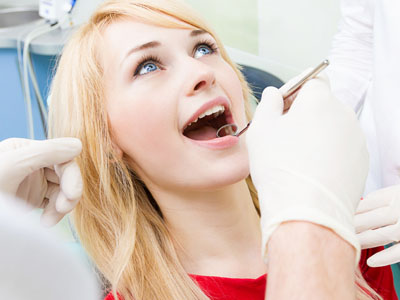
At the office of Stratford Family Dental, we emphasize taking a proactive approach as the best way to maintain a healthy, beautiful smile. By coming to our office as recommended for checkup visits and routine care, we can help you and every member of your family prevent the onset and progression of many oral health problems. As skilled and experienced providers of care, we offer a comprehensive range of preventive services, including examinations, professional teeth cleanings, and oral cancer screenings, along with patient education on hygiene, diet, and healthy practices.
Your first visit to our office establishes your oral health baseline and provides essential information on your dental interests and needs. We begin by carefully reviewing your medical and dental histories and taking special note of all of your dental concerns, as well as any symptoms that you may be experiencing. This initial conversation is followed by a thorough clinical examination, including an oral cancer screening, periodontal evaluation, and an analysis of your occlusion (bite). To perform a comprehensive oral exam, we'll recommend and take diagnostic films as needed. As we take a close look at your smile, we'll examine your teeth, the supporting bone and soft tissues, and the surrounding areas of the mouth, head, and neck. We'll make a note of any signs of clenching or grinding your teeth and assess your TMJ (temporomandibular joint) function. A comprehensive oral exam can also reveal the consequences that certain dietary choices, eating disorders, medications, harmful habits, and inadequate oral hygiene practices may have on your smile.
We want every patient to enjoy the benefits of a healthy and beautiful smile. At the office of Stratford Family Dental, you can rest assured that your oral exam is performed with the utmost care and that every member of our team is sensitive to your needs. Based on your oral exam findings and what we see on your diagnostic films, we'll outline what further treatment, if any, may be needed and discuss all your options in care.

At the office of Stratford Family Dental, we recognize that a healthy smile is more than just an attractive asset; it is also essential to one's overall well-being. Harmful conditions affecting your teeth, gums, jaws, and structures in and around the oral cavity can impact your overall well-being. As we perform an oral exam and check for the development of common dental conditions such as tooth decay or gum disease and screen for oral cancer, we also take note of any signs of problematic health issues that may have originated elsewhere in the body.
Today, researchers are establishing more and more links between poor oral health and systemic disease. Mounting evidence supports the idea that dental disease contributes to a range of health issues, including the following conditions:
Digestive disorders
Respiratory Problems
Cardiovascular Disease
Stroke
Diabetes
Alzheimer's Disease
The reverse is also true. Just as oral health problems can be linked to systemic illnesses, diseases in the body can likewise produce oral health issues. According to statistics, more than 90% of all systemic diseases (conditions affecting organs and systems in the body) can manifest signs and symptoms in the oral cavity. Experiencing dry mouth, bad breath, gum problems, ulcerations, or other oral lesions may be indicative of an underlying medical condition.

Enjoying a smile that looks good and functions at its best is not something you can take for granted. To maintain optimal oral health and a vibrant smile requires an effective dental hygiene regimen, a nutritious diet, routine checkups, professional cleanings, and a comprehensive program of preventive care.
Remember, it's important not to hold off seeing the dentist until you're in terrible pain or think there's something wrong. By scheduling a routine appointment for a comprehensive dental checkup and professional cleaning, we can help you keep your smile looking and functioning at its very best.
Our office encourages patients to come in twice a year for routine checkups and professional cleanings. In this way, we can monitor your oral health, reduce your risk of dental disease, and detect any issues early in their onset when they are typically the simplest to treat.
While maintaining a healthy smile depends upon keeping your teeth and gums clean at home, even for the best "brushers" and "flossers," it's difficult to reach every nook and cranny between the teeth and gums. For this reason, we emphasize the importance of professional teeth cleanings. In this way, our hygienist can thoroughly remove any accumulated plaque and tartar from between the teeth and gums, including areas that you may have missed. Since dental plaque harbors the bacteria that are responsible for cavities and gum disease, its removal prevents these disease processes from occurring. Following a dental cleaning and polishing to remove any superficial stains from your teeth, your mouth will feel fresh and clean.
Checkup and cleaning visits also represent an opportunity to educate patients in the best oral hygiene homecare methods and routines to maintain a healthy smile. As your trusted partner in care, we'll carefully explain and demonstrate the proper techniques for brushing, flossing, and other healthy oral care practices.
Even though proper dental care is essential at every stage of life, it's especially important for children to establish a strong foundation for a lifetime of oral health. With routine checkups, preventive treatment, and age-appropriate education in the best methods for taking care of their teeth, we can help your little ones protect their smiles from dental disease. We also monitor your children's dental and jaw development as they grow; keeping a close watch to determine if any orthodontic intervention will be needed to align their smiles.
Our goal is to help you and every member of your family establish healthy practices that will last a lifetime. At the office of Stratford Family Dental, we're proud of the reputation we've established for providing skilled and compassionate care. We work hard to make every visit to our office a positive experience while building long-standing relationships with our patients and achieving outstanding treatment outcomes.
Although we perform a thorough visual inspection of every aspect of your smile, the only way to see the deeper structures of the teeth, as well as the surrounding tissues and bone, is with dental x-rays or radiographs. Diagnostic x-rays not only reveal the presence of dental disease, but they also provide valuable information on the development, health, and integrity of teeth and orofacial structures.
Thanks to advances in technology, x-rays have entered the digital age. Instead of using traditional film-based methods, which involved long-exposure times and developing solutions, digital x-ray images can now be acquired, stored, and managed via digital sensors and integrated software programs.
Digital radiography offers several benefits to the patient, including the following:
Quicker with minimal exposure to x-ray radiation
Images can be viewed immediately after acquisition
Images can be electronically shared
Digital radiographs do not require any developing chemicals, create less waste, and are safer for the environment
Images are immediately stored in the patient's electronic file, where they can be easily viewed on a screen, shared, or printed out.
The type of diagnostic images our office will recommend depends on the nature of your visit and your oral healthcare needs.
Here's a list of some of the most common diagnostic films and the value of these images:
Periapical x-ray - This small film is typically taken of an individual tooth and provides a view of the entire tooth from the top of the crown to the tip of the root and bone adjacent to it.
Bitewing x-ray - This small film captures detailed views of the crowns of the premolars or molars and is typically used to check for dental decay.
Full Mouth Series - This set of x-rays consists of bitewing and periapical views of all the teeth.
Panoramic Film (panorex) - This film provides a 2D panoramic view of all the teeth and the left and right sides of the jaw. It offers a view of erupted teeth, developing teeth, impacted teeth, and allows an assessment of the health and integrity of the jawbone.
Cephalometric Film - This film provides a profile view of the face and jaws and is often used by orthodontists to assess a patient's skeletal facial and jaw growth.
Today, it's also possible to capture detailed three-dimensional images for diagnostic purposes, treatment planning, and the delivery of care. By using Cone-beam computed tomography (CBCT) your dentist can acquire, analyze, and reconstruct 3D images of a patient's teeth, jaws, and surrounding anatomy. This technology is often employed for diagnosis, surgical planning, treatment, and the accurate placement of dental implants.
An oral exam is a systematic evaluation of the teeth, gums, soft tissues, jaws and related structures to assess oral health and function. The exam includes a visual inspection, assessment of bite and jaw movement, and screening for signs of disease or injury. Regular exams establish a baseline so changes can be detected early and managed when treatment is simpler and outcomes are better.
Oral exams also emphasize prevention through patient education and personalized recommendations for hygiene, diet and risk reduction. By identifying early signs of decay, gum disease or lesions, an exam helps preserve natural teeth and limit the need for more invasive care. Examinations are an integral part of a long term strategy to maintain a healthy, comfortable smile.
A routine oral exam typically begins with a review of your medical and dental history and a conversation about any symptoms or concerns you may have. The clinician then performs a hands on inspection of teeth, gums, tongue, cheeks, palate and the temporomandibular joint while checking for wear, mobility, swelling or abnormal tissue changes. The hygienist or dentist will also evaluate occlusion and note habits such as clenching or grinding that can affect long term oral health.
Diagnostic imaging such as digital x-rays is recommended when indicated to visualize areas not visible to the eye, and a periodontal assessment measures gum health and pocket depths. If an oral cancer screening or other focused exam is appropriate, it will be performed as part of the visit. At the end of the appointment the team will review findings, answer questions and outline any recommended preventive steps or treatments.
For most patients, a comprehensive oral exam and professional cleaning every six months is a common recommendation because it helps control plaque and monitor early changes. Individual needs vary, and some people benefit from more frequent visits if they have active gum disease, a history of dental decay, certain medical conditions or ongoing dental treatments. Your dental team will tailor the recall interval based on your risk factors and treatment goals.
Changes in health status, new medications, pregnancy, or symptoms such as pain or bleeding gums can also prompt earlier or additional exams. Keeping a consistent schedule makes it easier to detect subtle signs of disease and to intervene before problems progress. Open communication about at home care and lifestyle factors helps refine the ideal frequency for your exams.
Yes, an oral cancer screening is routinely incorporated into a thorough oral exam and is an important part of early detection efforts. The clinician visually and manually examines the lips, tongue, floor of mouth, cheeks, throat and neck for unusual lumps, white or red patches, sores that do not heal or other suspicious changes. When available, adjunctive tools such as the VELscope device may be used to enhance visualization of tissue abnormalities.
Early detection of concerning lesions allows for timely referral, biopsy or monitoring as appropriate and can improve treatment options. If anything abnormal is found, the dental team will discuss next steps clearly and coordinate care with specialists when necessary. Patients should report any persistent oral lesions, pain or swelling between visits so these symptoms are evaluated promptly.
Dental x-rays are a diagnostic complement to the visual exam that reveal conditions not visible on the surface, such as interproximal decay, bone loss, root pathology and impacted or developing teeth. Modern digital radiography reduces radiation exposure, provides immediate images for review and allows the team to store and compare images over time for monitoring. The type and frequency of x-rays are selected based on clinical findings, age, risk factors and treatment needs.
Common radiographs include bitewings for decay detection, periapicals for individual tooth and root assessment and panoramic images for a broad view of the jaws. When complex diagnosis or surgical planning is required, three dimensional CBCT imaging may be employed to provide detailed views. Your dentist will explain why specific images are recommended and how they contribute to an accurate diagnosis and treatment plan.
Oral exams provide insight into more than local dental conditions because many systemic diseases produce signs in the mouth, and oral inflammation can influence overall health. Research continues to explore associations between periodontal disease and conditions such as cardiovascular disease, diabetes and respiratory problems, underscoring the importance of maintaining oral health as part of general health. A comprehensive oral exam helps identify oral manifestations of medical issues and prompts appropriate coordination with a patient’s medical providers.
Discussing your full medical history, medications and lifestyle with the dental team enables more accurate interpretation of oral findings and safer treatment planning. Regular exams can therefore support early recognition of health changes, facilitate referrals when warranted and contribute to an integrated approach to wellbeing. Prevention and timely care in the mouth often complement broader efforts to maintain systemic health.
For your first checkup at Stratford Family Dental bring a list of current medications, a summary of your medical history, and any recent imaging or dental records if you have them. If you have dental insurance, bring your insurance card and necessary subscriber information, and be prepared to share accurate contact and emergency information. Arriving with a clear list of concerns or symptoms helps the team address your priorities during the visit.
The initial appointment typically includes a thorough history, a clinical exam, recommended diagnostic images and a discussion of findings and options for care. The team will use this visit to establish a baseline, explain homecare strategies and answer questions about follow up or any recommended treatments. Expect the staff to make efforts to ensure your comfort and to involve you in shared decision making about your oral health.
Preparing a child for their first oral exam starts with a positive, age appropriate explanation of what will happen and why regular dental care is important for healthy teeth. Use simple language, role play with a toothbrush and mirror, and avoid using words that create fear such as pain or shot; instead emphasize count, clean and check. Choosing a morning appointment and bringing a favorite book or comfort item can reduce anxiety and make the visit smoother.
The dental team will focus on education, preventive measures like fluoride when appropriate, and gentle cleaning to create a pleasant first experience. They will also monitor jaw and tooth development to determine if future orthodontic evaluation is needed. Building a foundation of regular exams and positive reinforcement at home supports a lifetime of good oral habits.
If an exam reveals gum disease or tooth decay the dental team will explain the findings, document the extent of the condition and recommend a treatment plan tailored to your needs. For early gum disease, treatment may focus on professional cleaning, improved homecare techniques and more frequent monitoring, while more advanced cases can require periodontal therapy or collaboration with a specialist. Small cavities are commonly treated with conservative restorative procedures to preserve tooth structure and prevent further progression.
Treatment recommendations are discussed in detail so you understand the goals, sequence and expected outcomes, and the team will schedule appropriate follow up to monitor healing and effectiveness. Preventive education is emphasized to reduce recurrence, including brushing and flossing techniques and risk factor management. Timely intervention after detection increases the likelihood of successful, minimally invasive care.
Many practices offer strategies to make exams more comfortable for patients who experience anxiety, and discussing your concerns with the team before the appointment helps the staff plan appropriate support. Options can include behavioral techniques, pacing the visit, use of calming aids and, when clinically appropriate, controlled sedation methods supervised by trained professionals. A pre visit consultation to review medical history and expectations ensures that any sedation approach is safe and tailored to the individual.
Open communication about previous experiences, breathing difficulties or medical conditions allows the provider to recommend the most suitable comfort measures and monitoring protocols. The goal is to enable you to receive necessary preventive care and treatment in a manner that respects your comfort and safety. If sedation is considered, the team will explain preparation instructions, recovery expectations and required follow up to ensure a positive outcome.